Video creator
A creator needs narration for an explainer, tutorial, or short video without recording every line manually.
Text-led generation can make draft narration easier to revise before final editing.
noiz ai text to speechPlain-English guide
noiz ai voice refers to using artificial intelligence to create, transform, or reproduce spoken audio from text or a voice reference. The term describes a category of technology, not proof of one specific feature set.
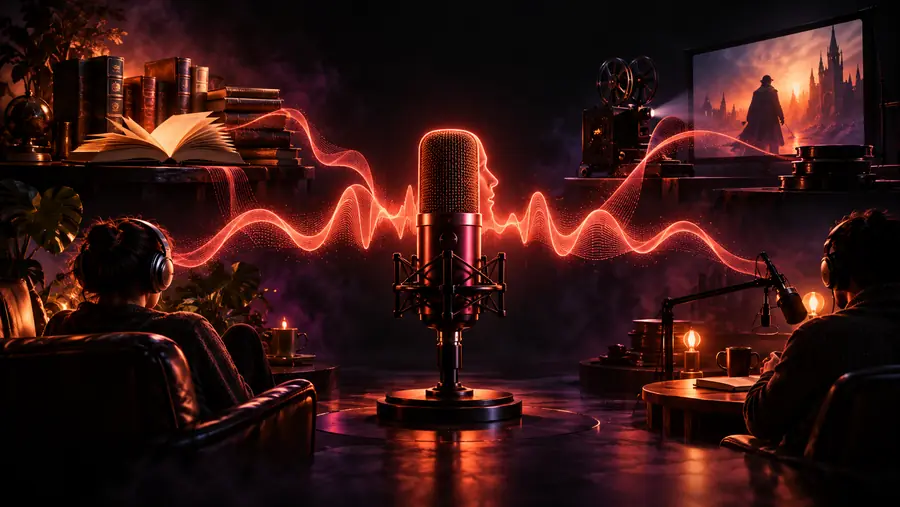
Voice AI is software that analyzes language and sound, then produces speech or voice-like audio according to instructions, text, or a recorded reference.
Most voice-AI systems can be understood as a short chain: interpret the input, apply a voice model, and return speech for review.
The system reads text, instructions, or a recorded sample. It looks for words, punctuation, emphasis, and other signals that affect how speech should sound.
A model maps the input to vocal qualities such as pronunciation, rhythm, pitch, or tone. The exact controls depend on the product and the selected workflow.
The system produces an audio result that should be checked for pronunciation, pacing, emotional fit, and whether the output matches the intended speaker or style.
The same underlying idea can support different jobs, but each use case has a different standard for accuracy, consistency, and consent.
A creator needs narration for an explainer, tutorial, or short video without recording every line manually.
Text-led generation can make draft narration easier to revise before final editing.
noiz ai text to speechA producer is testing intros, transitions, or placeholder reads while shaping an episode.
A generated draft can help evaluate timing and structure before a final human performance.
noiz ai reviewA team is adapting spoken content for audiences who need another language or a different delivery style.
The workflow becomes easier to assess when pronunciation, language support, and speaker consistency are checked separately.
noiz ai for voiceA person wants to understand what happens when a system is given a recording intended to represent their voice.
The key questions become permission, identity protection, intended use, and the ability to review or withdraw an output.
what is noiz ai voice cloningThese figures describe the Noizai site and its scope, not guaranteed capabilities of every voice-AI workflow.
A useful definition also shows what voice AI does not automatically guarantee. The comparison below distinguishes broad voice AI from voice cloning, a narrower use of related technology.
Basic input
Voice AI
Text, instructions, or audio may guide the result.
Voice cloning
A voice recording is typically central to the workflow.
Main purpose
Voice AI
Create, transform, or evaluate spoken audio.
Voice cloning
Reproduce recognizable characteristics of a particular speaker.
Identity requirement
Voice AI
A named individual may not be necessary for every task.
Voice cloning
Speaker identity and permission become central considerations.
Typical review
Voice AI
Check pronunciation, pacing, tone, and suitability.
Voice cloning
Also check whether the likeness is accurate and ethically authorized.
Main limitation
Voice AI
Naturalness and control can vary by language, text, and model.
Voice cloning
Similarity does not establish consent, ownership, or appropriate use.
Best question to ask
Voice AI
What input, controls, and output review does the workflow support?
Voice cloning
Do I have clear permission to create and use this speaker's likeness?
Whether you need narration, a draft read, or a deeper look at cloning, begin by defining the input and the result you actually need. Then review pronunciation, identity, consent, and usage expectations before relying on generated audio.
Explore voice creationThe phrase describes voice-AI technology that can create or transform spoken audio from text, instructions, or a voice reference. It is best treated as a description of a workflow or topic, not as a guarantee of a particular model, control, language, or output.
A voice-AI system interprets an input such as written text or a recording, applies learned speech characteristics, and generates an audio result. The output still needs review because pronunciation, pacing, tone, and naturalness can vary.
No. Voice AI is the broader category, while voice cloning focuses on reproducing recognizable characteristics of a particular speaker. Cloning therefore adds identity, permission, and responsible-use questions that may not apply to every text-to-speech task.
Check what inputs the workflow accepts, how the result can be reviewed, and whether the intended language and pronunciation are suitable. If a real person's voice is involved, confirm permission and understand where the generated audio will be used.